
Most Canadians should plan for roughly 6 to 12 months from submission to a decision on an I-192 waiver, though every file moves at its own pace. U.S. Customs and Border Protection (CBP) adjudicates the request, usually filed through e-SAFE, and completeness decides much of the wait. Your Parole Board of Canada record suspension may also be in play, and our team at Pardon Applications of Canada supports both.
TL;DR:
- Published estimates use different start points: CBP may count from completed biometrics, while e-SAFE’s 9 to 12 month average is not an individual deadline.
- Once accepted as complete and eligible, a Canadian record suspension has service targets of six months for summary offences and 12 months for indictable offences.
- Book biometrics promptly and file through e-SAFE with matching names, dates, and offence details; missing records or inconsistencies can trigger evidence requests and added delays.
- CBP has no legitimate paid fast track; if e-SAFE shows no movement beyond its posted average, contact CBP or the port with your reference number.
Table of Contents
- Why do published I-192 processing times differ so much?
- What changes how long your I-192 takes?
- What does a realistic Canadian timeline look like?
- How do you check your status and read the correspondence?
- What should you check before you submit?
- Can you speed up an I-192 for urgent travel?
- Our perspective: speed comes from getting it right the first time
- How we help with I-192 timing and accuracy
- FAQ
- Sources
Why do published I-192 processing times differ so much?
You will see several numbers online, and none of them is wrong. They measure different things. Some CBP guidance points to a shorter window counted from the point biometrics are complete, which is a narrower window than the full journey. Applicants who count from the day they mail or upload a file tend to report longer waits.
- CBP guidance: shorter windows, often counted from a specific step such as biometrics.
- e-SAFE postings: a longer average window, with a stated caveat that it cannot predict completion dates for individual files.
- Practitioner and community reports: anecdotes ranging from about 6 months to well beyond 12 months.
e-SAFE’s posted average is about 9 to 12 months, and it does not promise a date for any specific application.
Treat the average as a planning figure, not a deadline.
What changes how long your I-192 takes?
Some factors sit in your hands. Others do not. Knowing which is which helps you spend your effort where it counts.
- Submission method: electronic filing through e-SAFE generally moves faster than paper when done correctly.
- Completeness and accuracy: a missing document or an inconsistent date often triggers a request for further evidence, and each round can add to the wait.
- Biometrics: your fingerprints and photo are a prerequisite, so a slow appointment delays everything behind it.
- Nature of the offence: a more complex admissibility question takes longer to review, since every I-192 is treated as a substantive review.
- Procedural problems: a rejected or incomplete package can effectively send you back to the start of the queue.
Pro Tip: Book your biometrics the moment you can, because that single step often sits idle longer than any other.
What does a realistic Canadian timeline look like?
Preparation comes first, and it is easy to underestimate. Gathering certified court records, local police records, proof of identity and any translations, then arranging electronic fingerprints, commonly takes several weeks before you can even file. After that, you wait on CBP. These scenarios are illustrative, not guarantees:
- Best case, about 3 to 6 months in total: a complete electronic file, prompt biometrics and no requests for evidence.
- Typical case, about 6 to 12 months in total: a sound file that sits in the queue for the posted average, perhaps with one routine follow-up.
- Extended case, 12 months or more: a request for further evidence, a more complex history or a procedural problem that resets progress.
If your Canadian record suspension is still pending, remember that it runs on its own clock. The Parole Board of Canada endeavours to process summary offences within 6 months and indictable offences within 12 months once an application is accepted as eligible and complete. We explain how those clocks overlap in our guide to how long a U.S. waiver really takes.
How do you check your status and read the correspondence?
e-SAFE is the first place to look. It shows where your application stands, but it will not hand you a completion date, so do not read silence as a problem. Expect a handful of messages along the way:
- Receipt confirmation: proof that your submission arrived, usually soon after filing.
- Biometrics notice: instructions for completing fingerprints and a photo.
- Request for evidence: a list of what is missing or unclear, with a deadline to respond.
- Final decision: approval or refusal, sent once the review concludes.
Save every receipt, reference number and email in one folder. If months pass with no movement beyond the posted average, contact CBP or the relevant port of entry to ask for clarification, and have your reference numbers ready when you do.
What should you check before you submit?
Most avoidable delays come from small mistakes, not hard cases. Work through this list before you file:
- Confirm your fingerprints were submitted electronically and clearly labelled for the correct purpose.
- Verify that the correct fee is included and paid by an accepted method. For context, the Parole Board’s guide cites a $631 processing fee for a record suspension application.
- Assemble certified records, translations and identity documents, and keep copies of everything.
- Make sure names, dates and offence details match across every form.
- Ask a second set of eyes to review the file for gaps before it goes out.
Pro Tip: Mismatched name spellings and unsigned forms are the easiest errors to miss, and both can add to the wait.
Can you speed up an I-192 for urgent travel?
No legitimate paid fast track exists. CBP works files on a first-come, first-served basis, and any service promising faster government processing for a fee is not telling you the truth. If you have a trip coming up, your options are practical ones:
- Reschedule travel to fit a realistic decision window.
- Speak with the nearest U.S. consulate about your specific situation.
- Use a different entry route only where it is lawful and appropriate for your case.
A complete, accurate e-SAFE filing is the most dependable way to avoid unnecessary extra months.
The earlier you file, the more room you have.
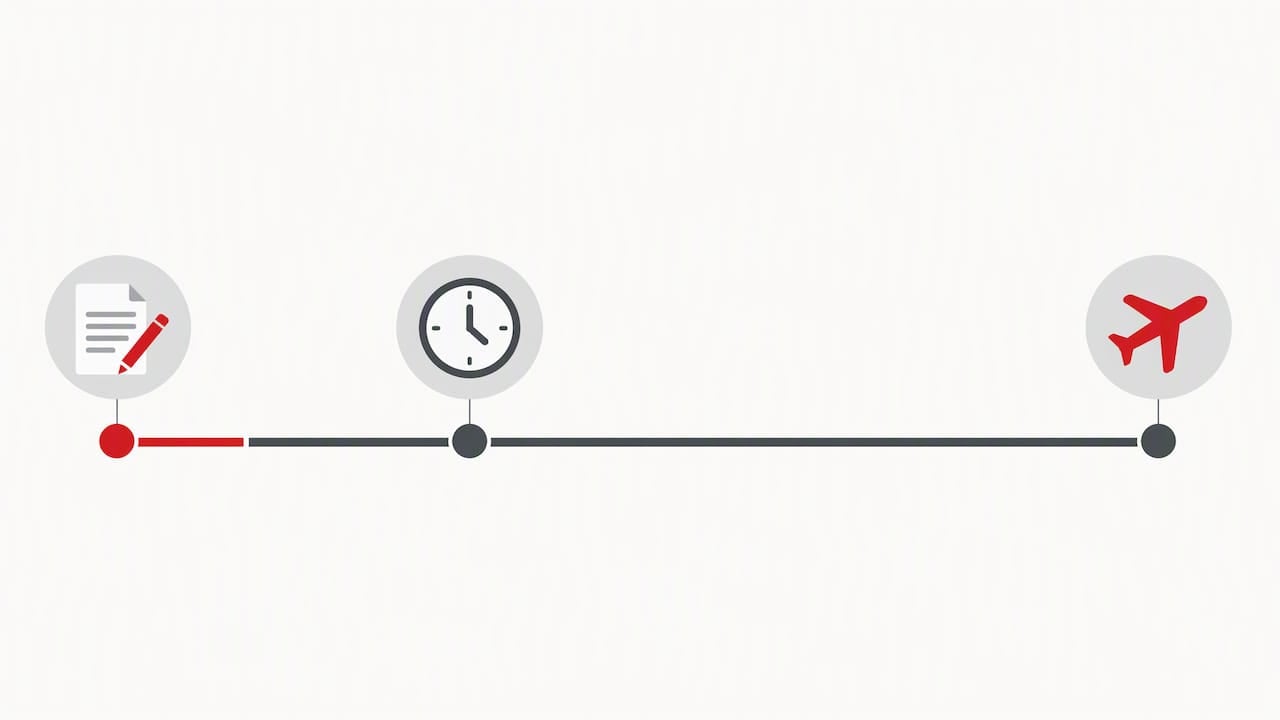
Our perspective: speed comes from getting it right the first time
Our view is simple: waiting is rarely the real problem, rework is. A file that returns for more evidence loses months that no one can win back. That is why we prepare complete I-192 files, guide you through fingerprints and supporting documents, and keep you informed through our dedicated support channels while CBP reviews your request. If you are unsure your file is ready, ask us for an eligibility assessment or a document review.
— PAC
How we help with I-192 timing and accuracy
We provide personalized I-192 preparation and client support built around completeness and timeliness. A professional review before submission may help reduce rework and the total wait.

- Eligibility guidance from our accredited officers
- A full document and consistency review before filing
- Support with fingerprints and supporting records
- Ongoing updates while your file is under review
Read our steps to a successful U.S. entry waiver, then book a consultation with us to start your file the right way.
This article is general information, not a substitute for advice from a qualified lawyer. Consult a qualified legal professional about your own circumstances before acting on anything here.
FAQ
How long does an I-192 take for Canadians?
Most Canadians should expect roughly 6 to 12 months, depending on how complete the file is and how it was submitted. e-SAFE’s posted average is a planning guide, not a promise for any one application.
Can I pay to speed up my I-192?
No. CBP processes applications in the order received, and no legitimate fee shortens that queue. Be wary of any service claiming otherwise.
Why is my I-192 taking so long?
A request for further evidence, a biometrics delay or a more complex admissibility history are the usual causes. Check e-SAFE and your email for any message requiring a response.
Do I still need a waiver after a Canadian pardon?
Often yes, because a Canadian record suspension does not automatically erase the U.S. admissibility issue. Our page on why you may still need a U.S. entry waiver explains the reasons.