

A conviction for a crime involving moral turpitude (CIMT) can make you inadmissible to the United States, and a Canadian Pardon (record suspension) does not change that. The tool built for this situation is the U.S. Entry Waiver (Form I-192), which gives you advance permission to enter as a nonimmigrant. If a past conviction is the shadow over your travel plans, this guide explains what a CIMT is, how a Canadian offence is judged, and what the waiver process involves.
TL;DR
- A CIMT is a conviction, or an admission of its essential elements, for conduct U.S. law treats as inherently base or dishonest, such as fraud, theft or intent to harm. Under 8 U.S.C. § 1182 it makes a foreign national inadmissible.
- The U.S. decides whether your offence is a CIMT under U.S. standards, by the wording of the law you were convicted under, not by how Canada labelled it.
- A Canadian Pardon does not remove the ground of inadmissibility. 22 CFR 40.21 says a foreign pardon or expungement does not.
- Canadians apply for a waiver through CBP’s e-SAFE system. We prepare the complete application and support you throughout.
- Results depend on your individual file, and no one can guarantee an outcome.
Table of Contents
- What a crime involving moral turpitude actually is
- How the U.S. judges a Canadian conviction
- When a CIMT makes you inadmissible
- Why a Canadian Pardon does not fix it
- The U.S. Entry Waiver (Form I-192)
- What a strong application looks like
- Waivers are not forever
- What about immigrant visas?
- What this costs, and what to budget for
- Your next step
- FAQ
- Sources
What a crime involving moral turpitude actually is
“Moral turpitude” is an old legal phrase, and U.S. law never defined it in a statute. The USCIS Policy Manual explains that, according to case law, it refers to conduct that shocks the public conscience as inherently base, vile or depraved. The conduct must be willful, morally reprehensible, and carried out with some form of guilty knowledge.
In practice, officers sort CIMTs into a few families:
- Crimes against a person, where harm is intended.
- Crimes against property that involve fraud or dishonesty.
- Sexual and family-related crimes.
- Crimes against government authority.
The State Department’s Foreign Affairs Manual (9 FAM 302.3) names fraud, larceny and intent to harm persons or things as the most common categories. For Canadians, that usually means offences such as theft, fraud, and some assaults.
The label “CIMT” is not on your Canadian record. There is no list you can look yourself up on. It is a U.S. legal judgment made about your conviction, and that is why people are often surprised: a charge that felt minor in a Canadian courtroom may carry a very different weight at the border.
How the U.S. judges a Canadian conviction
Three principles explain most of what happens.
The U.S. does not re-argue your case. In Matter of McNaughton, the Board of Immigration Appeals held that a Canadian Criminal Code conviction for conspiring to defraud the investing public was a CIMT. The board also said it will not retry guilt once a foreign court has decided it. Whether your conviction involves moral turpitude is then decided by prevailing U.S. standards.
The statute matters more than the story. The State Department’s guidance says moral turpitude is determined under U.S. federal law, based on the wording of the statute of conviction rather than the underlying acts. The USCIS manual adds that an offence depends on its statutory elements, so similarly named crimes can come out differently depending on the jurisdiction. The Canadian Criminal Code section you were convicted under, and the specific elements the Crown had to prove, are what count. For a clear walkthrough of how authorities analyze the statute of conviction, including which section of a law applies, that guide is a good companion read.
Divisible statutes get a closer look. Where a foreign law covers several different offences under one section, the FAM says officers may look beyond the conviction record to work out which part of the statute you were actually convicted under.
Two practical consequences follow:
- Two Canadians with the same label on paper (say, “assault”) can have different outcomes, because the exact section and its elements differ.
- Your certified court documents, not your memory of the events, are the starting point for any assessment.
If assault is your concern, our page on assault and U.S. entry goes through it in more detail.
When a CIMT makes you inadmissible
The rule in 8 U.S.C. § 1182(a)(2)(A)(i)(I) is broad. A foreign national who has been convicted of a CIMT, or who admits having committed one or admits its essential elements, is inadmissible. So is anyone who attempted or conspired to commit one. Purely political offences are the only carve-out in that clause.
Notice the word “admits.” Inadmissibility does not always require a conviction. How you answer questions at the border matters, and a past arrest, charge or caution that you do not declare can cause its own problems. Courthouse Libraries BC’s record suspension guide warns that failing to declare a past arrest could result in permanent ineligibility or detention, and that any criminal record, however minor or old, may lead to refusal of entry.
The exceptions, and who they cover
The law carves out two narrow exceptions. Both are strict, and whether either applies to you is a question about your exact file.
| Exception | What the law requires |
|---|---|
| Petty offence | The maximum possible sentence for the offence is one year or less, and any sentence actually imposed is six months or less. You also must have committed only one CIMT in your life. |
| Youthful offender | A single CIMT committed under age 18 where you were tried as an adult, with both the offence and your release from any imprisonment more than five years before you apply. |
The petty-offence and youthful-offender conditions come from the statute and from the Immigrant Legal Resource Center’s CIMT guide. That guide also notes that a second CIMT eliminates the petty-offence exception entirely.
There are also age-related protections for visa purposes. Under 22 CFR 40.21, offences committed before age 15 do not trigger the CIMT ground, and offences between 15 and 18 do not unless you were tried and convicted as an adult for a violent felony. A conviction in absentia does not count as a conviction for this purpose.
A word of caution about the petty-offence exception. A Canadian maximum sentence is set by the Criminal Code section, not by what the judge gave you. A short sentence alone does not settle the question. Many people assume they qualify and discover otherwise at the booth.
Why a Canadian Pardon does not fix it
This is the point that catches most people who have already done the hard work of getting their record cleared in Canada.
A Pardon, in the language of the Parole Board of Canada, is now a record suspension. In Canada it sets your record apart from the active database and can open doors in employment, volunteering and housing. It is a meaningful second chance. But U.S. rules treat it differently. 22 CFR 40.21 says that a pardon, amnesty, expungement or other act of clemency granted by a foreign state does not remove the CIMT ground of ineligibility. Only a full and unconditional U.S. presidential pardon does. Courthouse Libraries BC confirms that a pardon issued by Canadian authorities is not recognized for entry into the United States.
What does that mean in plain terms?
- Your Canadian Pardon is still worth having. It protects you at home.
- It does not tell U.S. officers you are admissible.
- If you want to travel to the U.S. with a CIMT conviction, the route is a waiver.
We explain this in more depth on our page about why a Canadian Pardon won’t get you into the United States. Many clients pursue both: the Pardon for life in Canada, and the waiver for travel to the U.S.
The U.S. Entry Waiver (Form I-192)
If you are inadmissible, Form I-192 asks the U.S. government for advance permission to enter temporarily as a nonimmigrant. The USCIS instructions for Form I-192 set out the legal basis and who uses it. If you instead need a nonimmigrant visa, those instructions point you to a U.S. Embassy or Consulate, but Canadians are generally visa-exempt for short visits, which is why the I-192 is the usual path.
How the filing works
Canadians file electronically through CBP’s e-SAFE system. According to the e-SAFE FAQ:
- You complete and pay for the application online.
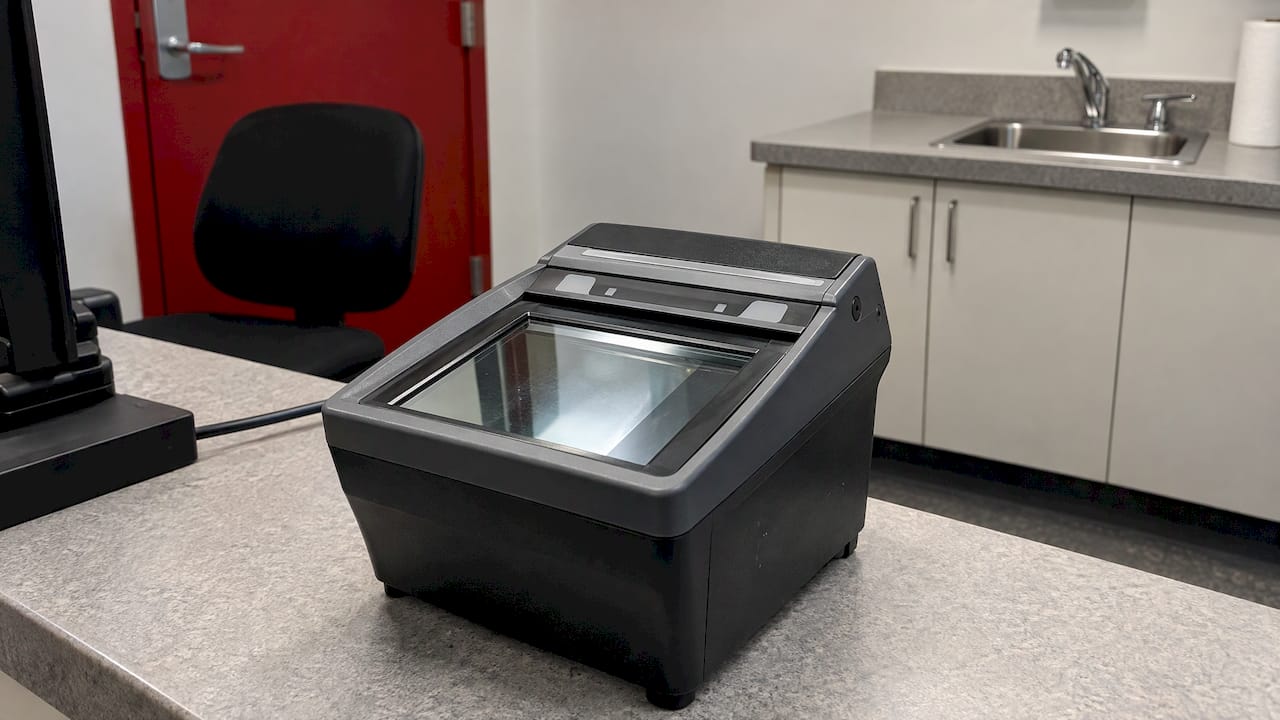
- You then have 45 days to report to a designated port of entry to give biometrics (fingerprints and a photograph). If you miss that window, the application is deemed abandoned and denied.
- An approved waiver arrives as an electronic, signed Form I-194, which you must carry on every trip.
CBP’s Form I-192 page states that e-SAFE filings with biometrics completed at a port of entry have processing times of 90 to 120 days from the day biometrics are completed. That clock starts only when your biometrics are done, so the time spent gathering documents comes first. Our page on I-192 processing time walks through the whole timeline from preparation to decision.
What you need to assemble
CBP lists evidence of citizenship, the signed Form I-192, a Form G-28 if someone represents you, and fingerprints. Courthouse Libraries BC’s guide adds the documents Canadians typically gather: Form G-325A, RCMP C216 fingerprints, a certified RCMP criminal record, and court documents where charges are involved.
This paperwork is where applications slow down. A missing court document, a record that does not match the court file, or an incomplete explanation of the offence can cost weeks. Our accredited Pardon and Waiver officers work with you in a personalized consultation to assess eligibility and prepare a complete and accurate application, which is designed to reduce the chances of delays or denials.
What a strong application looks like
The I-192 is a discretionary request. You are asking for permission, and the quality of the file counts. These are the points we take seriously with every client:
- Accurate records. Your RCMP record, your court documents and your own account all have to line up.
- Complete disclosure. Every offence, charge and conviction goes in, including old ones. Leaving something out is far riskier than including it.
- Clear purpose of travel. The waiver is for temporary entry, so your reasons for travelling should be stated plainly.
- Evidence of your life since the offence, such as steady work, family responsibilities and community involvement.
For a deeper look at preparation, see our guide to the steps to ensure a successful U.S. entry waiver. We cannot promise a result, because the decision belongs to U.S. authorities. What we can do is make sure nothing in your file is missing or inconsistent when it gets there.
Waivers are not forever
A waiver covers temporary entry and does not permanently remove the inadmissibility. When it expires you need to renew it, and it is wise to start well ahead of your next planned trip so you are not left waiting. We handle I-192 renewals for returning clients, and our knowledge base explains waiver renewals in plain language.
If a waiver application is refused, that is not necessarily the end of the road. Our page on what an I-192 denial means and your next steps explains the options.
What about immigrant visas?
Everything above concerns temporary visits. People who want to immigrate to the U.S. face a different set of rules. The State Department’s guidance says an immigrant-visa applicant ineligible on the CIMT ground may seek a waiver under INA 212(h) in limited situations. One is where the disqualifying activities happened more than 15 years before the application, admission would not be contrary to national welfare, safety or security, and the applicant has been rehabilitated. Another covers certain close-relative and VAWA cases. No waiver is available for murder or torture convictions. This is a separate process from the nonimmigrant waiver our service covers, so if you are planning to move to the U.S. permanently, take it up with a U.S. immigration lawyer.
What this costs, and what to budget for
People researching a CIMT and U.S. entry usually have a Canadian Pardon in mind as well, so a note on costs. The Parole Board of Canada’s filing fee for a record suspension application is $50, but that fee is only one part of the total. There are many other costs in the process, including obtaining your RCMP and local police records, court documents, fingerprints and any other records your file requires. A realistic budget includes all of these.
Our Pardon Only plan is $80 per month. For U.S. waivers, priority processing is available as a one-off charge of $95 to $150. Cost details for the waiver itself are on the same page, so you can see what applies to your situation.
Your next step
If you have a conviction that could be a CIMT, or you are not sure, the first move is a clear picture of your record and how U.S. officers are likely to read it. Pardon Applications of Canada has spent over 55 years helping Canadians move past their records, and our accredited officers handle Canadian Pardon applications and U.S. Entry Waivers (I-192) under one roof.

We start with a personalized consultation to assess your eligibility, then prepare your complete documentation and keep you informed through dedicated support channels. You can schedule a free consultation or look at all our services. If you want to see the paperwork first, our explanation of Form I-192 breaks it down without the jargon.
FAQ
Is a DUI a CIMT?
Not automatically. Whether an offence is a CIMT depends on the statutory elements of the law you were convicted under, and the U.S. applies its own standards. A DUI can still create other problems at the border, so have your court documents reviewed before you travel.
Can I enter the U.S. if my Canadian record has been suspended?
A record suspension is not recognized for U.S. entry purposes. 22 CFR 40.21 says a foreign pardon or expungement does not remove the CIMT ground of ineligibility. If you are inadmissible, a U.S. Entry Waiver is the route to temporary entry.
How long does a U.S. Entry Waiver take?
CBP states that e-SAFE filings have processing times of 90 to 120 days from the day biometrics are completed. Preparing your documents comes before that, so plan well ahead of any trip.
Can I be inadmissible without a conviction?
Yes. The law covers anyone who admits having committed a CIMT, or admits its essential elements. Be accurate and complete when answering questions about your history, and get your situation assessed before you travel.
Sources
- 8 U.S.C. § 1182: Inadmissible aliens
- 22 CFR 40.21, Crimes involving moral turpitude
- 9 FAM 302.3, Ineligibility based on criminal activity
- USCIS Policy Manual, Volume 12, Part F, Chapter 5
- Matter of McNaughton
- ILRC guide to CIMT rules
- CBP e-SAFE FAQ
- CBP Form I-192 page
- USCIS Form I-192 instructions
- Courthouse Libraries BC, Record Suspensions (Pardons)
- Grace Legal Group, immigration consequences checklist
Recommended
- Assault and U.S. Entry: What Canadians Need to Know
- Conditional Discharge and US Entry: What Canadians Need to Know
- Shoplifting and U.S. Entry: What Canadians Need to Know
- US Entry Waivers: What You Need to Know
This content brings together contributions from PAC, our content team, and AI tools, with PAC retaining editorial responsibility. It is shared for general information, not legal advice. Laws and procedures may change; seek qualified legal advice for your circumstances.