



You can apply for a record suspension after a DUI once every part of your sentence is complete and the waiting period has passed: 5 years for summary convictions, 10 for indictable offences. A suspension seals the record from standard checks but does not erase it or lift a driving prohibition. The application fee is $50.00 as of 2026.
TL;DR:
- The five year summary and ten year indictable waiting periods begin only after all sentence conditions end; undocumented trial method triggers the longer term.
- Gather certified court dispositions, sentencing records, fingerprint based RCMP results, local police checks, and proof that every fine and restitution order is paid.
- After accepting a complete, eligible file, the Board targets 6 months for summary and 12 for indictable offences; proposed refusals can take 24 months.
- A Canadian suspension does not guarantee United States entry; depending on the conviction, travelers may need prior approval or a waiver before traveling.
Table of Contents
- Who qualifies for a DUI record suspension and when can you apply?
- What does a record suspension do, and what does it leave in place?
- What forms and documents do you need to file?
- How long does the Parole Board take to decide?
- Which mistakes slow down or sink DUI applications?
- Will a record suspension get you into the United States?
- Why we think the paperwork matters more than the conviction
- Let us prepare your DUI record suspension application
- FAQ
- Sources
Who qualifies for a DUI record suspension and when can you apply?
Eligibility starts only after you have finished everything the court imposed. The waiting period is counted from that finish line, not from the conviction date. Under current rules, offences prosecuted summarily carry a shorter wait than those prosecuted by indictment, and the Parole Board of Canada applies the longest period when the method of trial is not recorded. Serious exceptions exist, such as Schedule I offences and certain long custodial sentences, so complex files deserve a close read of the Board’s guidance.
Before you count the years, confirm these points:
- Your prison term, probation or conditional sentence has ended.
- Every fine, surcharge, restitution order and court cost is paid in full.
- You know whether the Crown proceeded by summary conviction or by indictment.
- You have the exact date your sentence ended, taken from court or corrections records.
Our own breakdown of record suspension eligibility walks through the same checks in more detail.
What does a record suspension do, and what does it leave in place?
A suspension keeps your conviction in a separate file, so it normally does not appear on a standard criminal record check. That helps with employment and volunteer screening. It is not an expungement, though, and it changes less than many people hope.
- Driving and weapons prohibitions stay in force, because licensing and prohibition orders sit outside the Board’s decision.
- A record suspension does not retroactively change how a conviction counts in future legal proceedings (PBC guidance).
- Ask the employer how disclosure works before you answer.
- Foreign border officers are not bound by a Canadian suspension.
For wider background, see our overview of understanding record suspension in Canada.
What forms and documents do you need to file?
The PBC application guide lists every required form. Work through them in this order:
- Read the guide and download the current application form.
- Complete the Court Information form and gather certified court dispositions and sentencing records.
- Order your RCMP fingerprint-based record and complete the local police records check form.
- Collect proof that fines, surcharges and restitution are paid.
- Fill in the Measurable Benefit/Sustained Rehabilitation form with specific, personal answers.
- Add the Schedule 1 exception form if it applies to you.
- Complete the processing fee form and the consent form, then pay the $50.00 fee by credit card, certified cheque, money order or bank draft payable to the Receiver General for Canada. Personal cheques and cash are not accepted.
If your paperwork includes court or police documents that must be legalized for use abroad, a service such as Speedy Apostille Services can handle the apostille step.
Pro Tip: Order the RCMP fingerprint check first. It often takes the longest, and confirming your method of trial early prevents the longest-wait fallback.
How long does the Parole Board take to decide?
The clock starts only when the Board accepts your file as eligible and complete. From that point, the targets are:
- 6 months for summary offences.
- 12 months for indictable offences.
- Up to 24 months when the Board proposes to refuse and you make representations.
A proposed refusal usually follows doubts about sustained rehabilitation or gaps in the file. You have the right to respond in writing, which is fair but adds time. Add your own preparation to these figures, since gathering records and police checks can take weeks before you ever submit. Our timeline guide maps both phases together.
Which mistakes slow down or sink DUI applications?
Most delays trace back to avoidable errors. Run this list before you mail the package:
- Replace generic Measurable Benefit answers with specifics: steady employment, community involvement, family stability, and what a suspension would change for you.
- Match every date across your court records, police checks and forms.
- Request certified court records directly from the court that sentenced you.
- Use the correct police check type and order it early.
- Pay only with an accepted method.
Pro Tip: Have someone who has not seen your file read the rehabilitation form. If they cannot picture your life from your answers, the Board will struggle too.
Some applicants seek help to reduce the risk of delays caused by incomplete paperwork. See our note on common application mistakes.
Will a record suspension get you into the United States?
Not by itself. A Canadian suspension does not guarantee admission to other countries, and U.S. border officers can still treat a DUI as grounds for inadmissibility. Depending on their convictions, travellers may need U.S. entry approval or a waiver in addition to a Canadian record suspension (PBC guidance).
- If you also hold a foreign conviction, the order of steps matters, since a record suspension is often required first before seeking rehabilitation.
- Carry a copy of your suspension when you travel.
- Check each country’s entry rules before you book.
Our guide to travelling to the U.S. with a DUI explains the waiver route, and why a pardon still leaves a waiver necessary covers the common surprise.
Why we think the paperwork matters more than the conviction
A DUI conviction rarely closes the door on a record suspension. What closes it, or slows it by months, is a file that is incomplete, inconsistent or vague about who you are today. People often expect the Board to judge the worst night of their life. The Board reviews the application materials, so careful preparation matters.
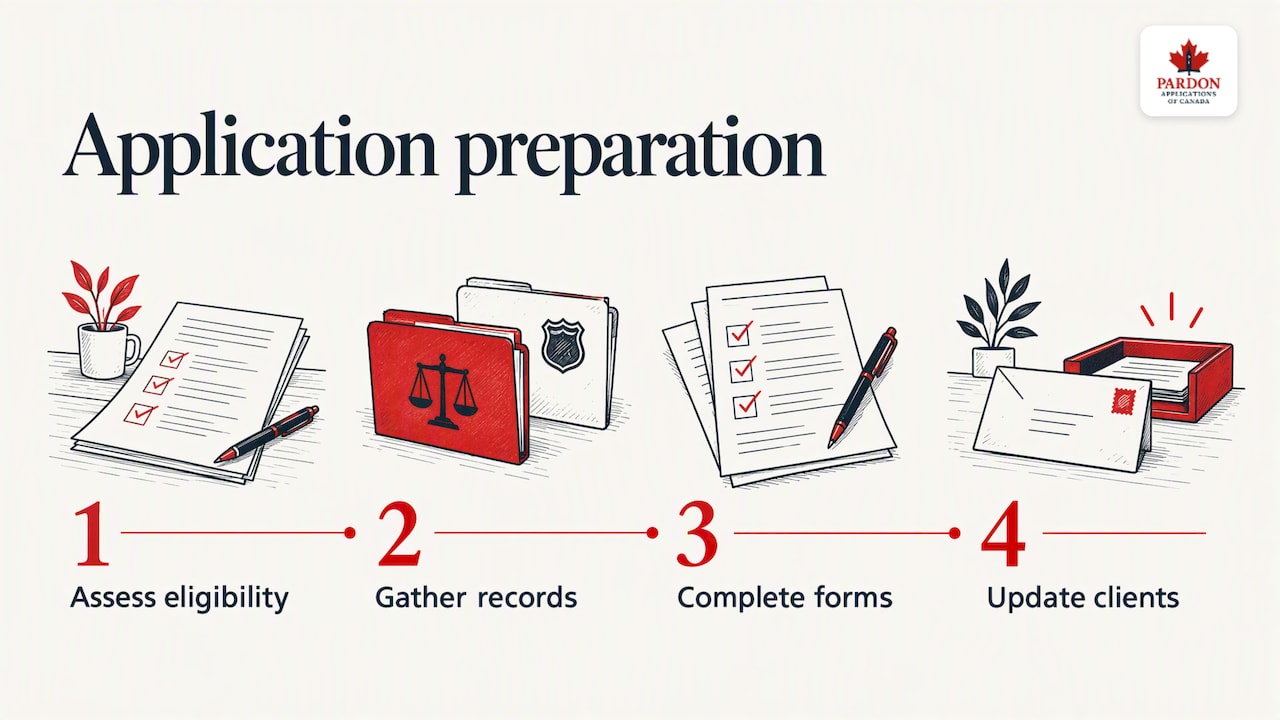
We assess eligibility, gather records, complete forms and keep clients updated, so the common paperwork slips never reach the Board. Whether you file on your own or ask us, use the checklist above. A well-prepared application can help reduce the risk of delays.
— PAC
Let us prepare your DUI record suspension application

Our team offers a clear path from first question to filed application:
- An eligibility assessment with an accredited officer.
- Full application preparation, including the rehabilitation form.
- Help obtaining court and police records.
- Submission support and updates until the Board responds.
Filing on your own is still an option, and our guide to how to get a pardon in Canada shows what it involves. When you would rather hand over the paperwork, apply now, schedule a call or download the application, and we will take you through the next step.
This article is general information, not a substitute for advice from a qualified lawyer. Consult a qualified legal professional about your own circumstances before acting on anything here.
FAQ
How much does a record suspension cost in Canada?
The Parole Board application fee is $50.00 as of 2026. You also pay for police checks and court records, and professional help adds its own fees.
Does a DUI show up on a driver’s abstract?
A record suspension does not change your driving record. Licensing and driving prohibitions are handled separately, so they stay in force after a suspension.
What is the usual penalty for a first DUI?
A first conviction carries a mandatory minimum fine, with higher minimums at higher blood alcohol levels. Justice Canada explains the penalty tiers and the escalation for repeat offences.
Can a DUI keep you out of other countries?
Yes. A Canadian suspension does not bind other governments, so the United States and some other countries may still refuse entry. Check each country’s rules before you travel.